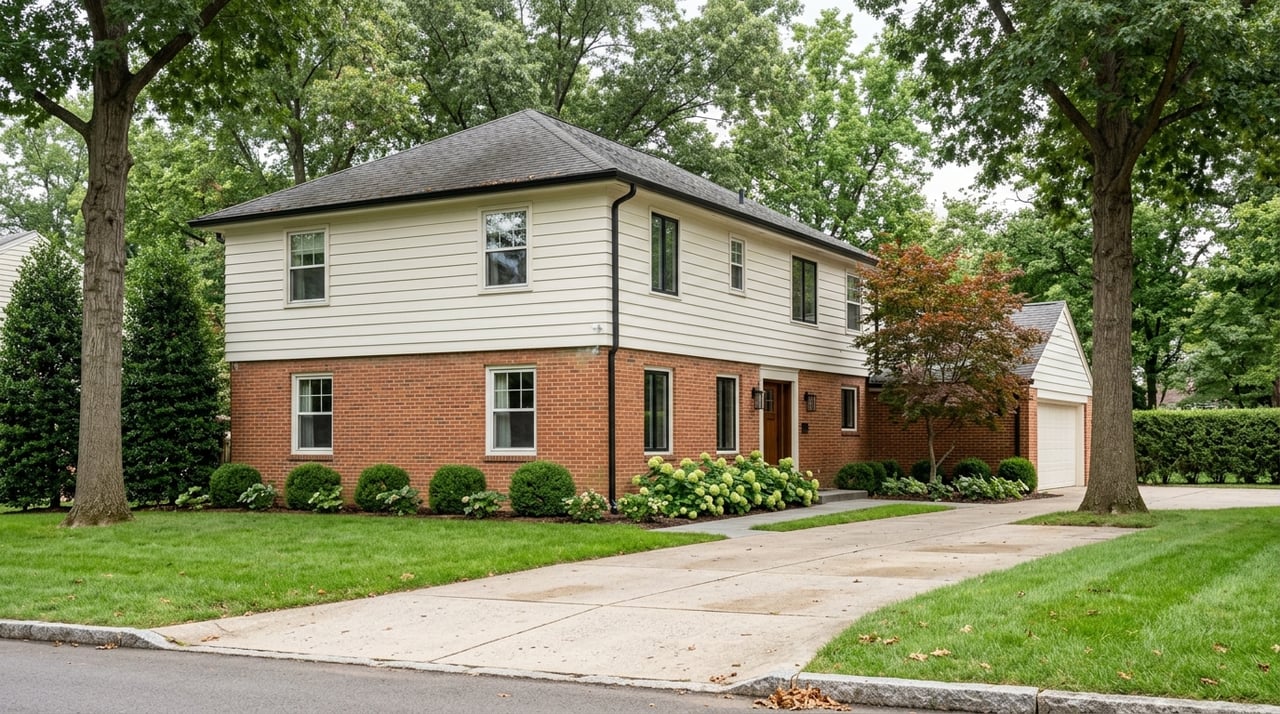
McLean Teardown and Custom Homes: What to Know Before You Build
Wondering whether an older McLean house is a renovation candidate or a true teardown opportunity? In a market where lot value, design goals, and county rules can all shape the outcome, that decision is rarely simple. If you are considering buying, selling, or rebuilding in McLean, it helps to understand how the land, not just the house, drives the process. Let’s dive in.
McLean is one of Fairfax County’s established custom-home areas, and much of the community is already built out. Outside Tysons, the McLean Community Business Center, and West Falls Church TSA, county planning guidance describes the area as predominantly stable, low-density residential neighborhoods. That means teardown opportunities often come from replacing an older house on a desirable lot rather than finding vacant land.
In practical terms, this is why older homes in long-established parts of McLean can attract attention from buyers seeking custom-home potential. Local reporting has highlighted this pattern in places such as Franklin Park and Franklin Forest, where 1940s and 1950s homes have been replaced with much larger new houses. In one recent example, a Franklin-area teardown sold for $1.08 million, while another nearby new build reached nearly $5 million.
Not every older home is a strong teardown candidate. In McLean, the most promising properties are often those where the land is worth more than the existing structure, especially if the lot is well-located, usable, and large enough to support a modern custom build.
County planning documents show that parts of McLean were intentionally designed as low-density areas, including western sections with half-acre lots and scattered older homes. That kind of lot pattern can create opportunity, but it does not guarantee that a parcel is easy to build on.
One of the most important distinctions in Fairfax County is that a lot can be valid without being buildable. To move forward with new construction, the parcel must meet rules tied to minimum yards, floodplain restrictions, Chesapeake Bay Preservation requirements, erosion and stormwater standards, legal public-road access, and in some cases well or septic approvals.
The county also notes that lots created before March 1, 1941 are valid, and some later lots may also qualify based on county mapping and structure history. This is one reason early lot validation and zoning review matter so much before you commit to a purchase or demolition plan.
A lot may look generous on paper and still feel constrained once real-world rules are applied. Fairfax County zoning controls setbacks, and single-family residential lots generally allow one dwelling per lot unless an accessory living unit is approved.
Parking and paving limits can also affect how a home sits on the site. In some residential districts, front-yard paving restrictions can change driveway layout, parking options, and landscaping plans. Add easements, tree preservation, and access requirements, and the usable building envelope may be smaller than you expect.
Environmental conditions can be decisive in McLean teardown projects. Fairfax County states that Resource Protection Areas generally prohibit development, land disturbance, and vegetation removal without prior approval.
If land disturbance exceeds 2,500 square feet, a county permit is required. Tree conservation is also part of the review process, so mature trees and root zones can affect both design flexibility and overall cost. On some lots, these issues are minor. On others, they can shape the entire project.
If you are evaluating a teardown in McLean, the smart move is to treat it like both a real estate decision and a site-analysis exercise. The goal is to understand what the lot can realistically support before you fall in love with a floor plan or pricing assumption.
Your first step should be confirming the zoning district and reviewing the plat or house location survey. You want to understand boundaries, easements, setbacks, and whether the parcel supports the home size and layout you have in mind.
Fairfax County says an accurate survey is required when a structure is altered to confirm compliance with building, site, and zoning requirements. The county also makes residential plats available through its zoning property file system, which is a key starting point for lot-level research.
In McLean, some of the most important early checks include:
County guidance notes that floodplain and RPA conditions can affect what may be built and may require separate approvals. This is often the point where a property stops being just a house on a lot and becomes a more complex land-use question.
A teardown project usually involves more than one permit. Fairfax County requires a residential demolition permit for complete or partial demolition and a residential new-building permit for a new single-family custom home.
The county review process may involve zoning, wastewater, the fire marshal, building plan review, site technician review, and the Health Department if the property uses a well or septic system. For buyers and owners, that layered review is a reminder that time, coordination, and up-front planning matter.
Most successful projects begin with feasibility work, not demolition. In McLean, the site often drives the design more than your initial wish list because the area is largely built out and shaped by low-density planning.
A practical path usually looks like this:
If land disturbance reaches 2,500 square feet or more, additional county review may also be triggered. That is why the cleanest projects tend to start with a lot that works on paper before design moves too far ahead.
If you are buying in McLean with teardown potential in mind, it helps to look past the existing finishes and focus on the fundamentals of the parcel. A dated house on the right lot may offer far more long-term value than a cosmetically updated house on a more constrained site.
A few useful questions to ask early include:
These are not minor details. In McLean, they can determine whether a property is a compelling custom-home opportunity or an expensive compromise.
If you own an older home in McLean, your property may appeal to more than one type of buyer. Some buyers will focus on the existing home. Others may see the land value, lot shape, and location as the real story.
That is why teardown positioning requires careful analysis. Pricing, marketing, and buyer outreach should reflect whether the property is best presented as a livable home, a lot purchase, or a hybrid opportunity for someone deciding between renovation and replacement.
For sellers, strong preparation often means gathering available surveys, plats, and other property information early. When buyers can understand the lot more clearly, they are better equipped to evaluate the opportunity with confidence.
Because of the county review process, teardown projects often benefit from early coordination among several professionals. Depending on the lot, that can include your real estate advisor, builder, architect, surveyor, civil engineer, land-use attorney, and lender.
This does not mean every lot is complicated. It does mean that the more zoning, site, access, drainage, or environmental issues a parcel has, the more valuable early expert input becomes. In a market like McLean, informed decisions at the start can help you avoid costly surprises later.
A McLean teardown is rarely just about removing an old house and starting fresh. It is a land-use, design, and permitting decision shaped by zoning, lot conditions, access, environmental rules, and the realities of a built-out custom-home market.
If you are buying, selling, or exploring a custom build in McLean, a clear-eyed review of the lot is the smartest place to start. For strategic guidance on teardown opportunities, custom-home positioning, and the McLean market, connect with Hanna Abebe.
Whether you’re buying your first home, selling a trust property, or navigating a probate sale, my goal is always the same: to provide honest guidance, strong advocacy, and a smooth experience from beginning to end. Real estate is about people, not just properties. I would be honored to help you take your next step.
2300 Clarendon Blvd Ste 200 Arlington, VA 22201