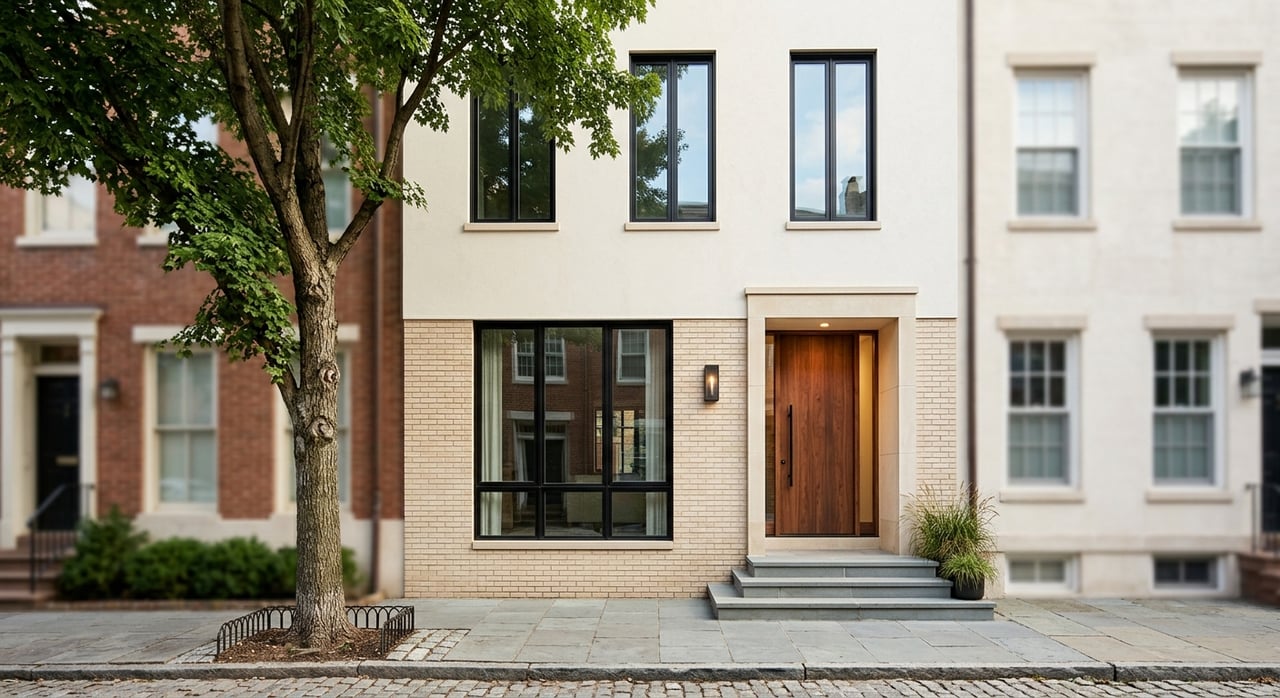
Falls Church vs Arlington Living and Nearby Suburbs
Trying to choose between Falls Church, Arlington, and Alexandria? On paper, they can look similar: close-in Northern Virginia locations, strong transit access, and higher home values than many other parts of the region. But once you look at scale, housing mix, walkability, and day-to-day lifestyle, the differences become much clearer. This guide will help you compare Falls Church to nearby urban suburbs so you can decide which setting best fits the way you want to live. Let’s dive in.
Falls Church is an independent city of about 2.2 square miles, and that small footprint shapes almost everything about the experience of living there. The city brands itself as “The Little City,” which fits its compact, self-contained feel.
If you are comparing places by overall atmosphere, Falls Church often feels more neighborhood-scale than Arlington or Alexandria. It offers an urban-suburban mix, but in a smaller, more manageable format that can appeal to buyers who want convenience without the intensity of a larger urban corridor.
Arlington is built around a more corridor-based planning model, with higher-density development concentrated around Metro station areas and urban villages. That gives it a more consistently urban feel in places like Ballston, Clarendon, Virginia Square, Crystal City, and Pentagon City.
Falls Church, by contrast, feels smaller and more residential in scale. While it has strong Metro access, it does not read as one long chain of high-density mixed-use districts in the same way Arlington often does.
For many buyers, the practical difference is simple. Arlington tends to suit people who want the broadest range of transit-oriented living options, while Falls Church tends to suit people who want a compact city with a stronger neighborhood feel.
Alexandria has a different identity again. Its planning framework places strong emphasis on small-area plans, historic preservation, and transit-oriented corridors, and its best-known urban experience centers on Old Town and the King Street corridor.
That gives Alexandria a more historic-core orientation than Falls Church. If Falls Church feels like a compact town center, Alexandria often feels more like a destination city with a defined historic commercial heart.
For buyers, this usually comes down to preference. Falls Church offers a smaller-scale, everyday convenience, while Alexandria often appeals to people drawn to a stronger historic setting and a more established destination retail and waterfront identity.
Walkability is one of Falls Church’s strongest points. Local tourism materials give the city a walkability score of 93, and the city notes that most shops, restaurants, and attractions are within a 5- to 10-minute walk of one another.
That compact layout can make daily life feel simple. You are not just getting walkability in theory. You are often getting short, practical trips between dining, errands, and local events.
Arlington’s average Walk Score is 71, with especially walkable districts such as Ballston-Virginia Square, Clarendon-Courthouse, and Lyon Village. Alexandria’s citywide Walk Score is 62, though walkability is much stronger in specific areas like Old Town and King Street, where King Street scores 98.
The key difference is pattern. Falls Church offers the shortest, most town-center-style walking experience, Arlington offers multiple walkable nodes across the county, and Alexandria’s strongest walkability is concentrated in its historic core.
If housing mix matters to you, Falls Church stands apart here too. The city’s planning policies aim to preserve neighborhood character while also supporting a mix of housing types and price levels, but the overall scale remains largely residential.
Census data shows that Falls Church is 52.5% owner-occupied, compared with 41.3% in Arlington County and 42.1% in Alexandria. That suggests Falls Church is relatively more owner-heavy and somewhat less apartment-dominant than its nearby urban-suburban peers.
Arlington offers a wider variety of Metro-adjacent multifamily and “missing middle” housing options. Its land use framework supports mixed-use growth and a broad range of housing types, including duplexes, semi-detached homes, townhouses, and small multifamily buildings in areas that previously allowed only single-family homes.
Alexandria has a broader mix as well, including detached homes, attached homes, townhomes structured as condos, and a substantial multifamily rental inventory. A recent city housing analysis found Alexandria was 57% renter and 43% homeowner in the analysis year, which helps explain why it can feel more varied in housing form and tenure.
Price is always an important part of the comparison, but it helps to look at the data carefully. March 2026 median sale prices were reported at $745,000 in Falls Church, $815,000 in Arlington, and $663,000 in Alexandria.
At the same time, Census owner-occupied value estimates were $1.056 million in Falls Church, $895,000 in Arlington, and $735,000 in Alexandria. These are different measures, so they are best read as separate snapshots, not direct apples-to-apples rankings.
What do they tell you in practical terms? Arlington currently appears to lead on closed-sale median price, while Falls Church shows the highest owner-occupied value estimate. That can reinforce the idea that Falls Church is a smaller, owner-oriented market with limited inventory and strong long-term value perception.
Median household incomes are also high across all three locations: $143,262 in Falls Church, $142,114 in Arlington County, and $119,681 in Alexandria. For buyers, that points to three relatively affluent close-in markets, but each with a different housing pattern and feel.
Falls Church performs well on transit access for a city its size. East Falls Church station serves the Orange and Silver lines, and West Falls Church serves the Orange Line.
That is a meaningful advantage if you want rail access without living in a much larger urban district. For many buyers, Falls Church offers a useful middle ground: close-in location, strong transit options, and a less intense built environment.
Arlington’s transit identity is more extensive and more deeply tied to its major mixed-use corridors. Ballston is a major transportation hub, while Pentagon City and Crystal City are closely associated with transit-oriented development and denser live-work-shop patterns.
Alexandria also offers strong transit connections, with Metro service, DASH bus service, and new transitway corridors shaping mobility across the city. Its transit story is especially connected to the King Street and Old Town area.
Mean commute times are fairly close: 28.7 minutes in Falls Church, 26.2 minutes in Arlington County, and 28.4 minutes in Alexandria. Because the numbers are so close, the bigger question is often not commute time alone, but what kind of daily environment you want around that commute.
Lifestyle is where the contrast becomes especially clear. Falls Church has a distinct identity anchored by Eden Center, which the city describes as the largest Vietnamese shopping district on the East Coast, along with downtown festivals and local restaurant clusters.
The city also notes that its retail core is compact and pedestrian-friendly, with free public parking lots and garages. That may sound like a small detail, but it can make a real difference in everyday convenience.
Arlington’s retail and dining profile tends to be more corridor-driven. Clarendon and Ballston are closely tied to nightlife, mixed-use convenience, and larger concentrations of offices, apartments, restaurants, and shops.
Alexandria leans more toward destination-oriented retail and dining, especially in Old Town and along King Street. That creates a strong sense of place, but it also feels different from the more compact, highly practical downtown rhythm you get in Falls Church.
Falls Church can be especially appealing if you want a city that feels compact, connected, and easier to navigate day to day. It often fits buyers who value walkability, Metro access, and a homeowner-leaning environment, but do not necessarily want the scale or density that comes with Arlington’s major corridors.
It can also be a strong fit if you like the idea of a small downtown with distinct local identity. In this case, that identity includes a well-known dining scene, a pedestrian-friendly core, and a city structure that feels self-contained.
From a strategic real estate perspective, Falls Church may also appeal to buyers who are thinking beyond square footage alone. Its small size, high owner occupancy, and strong value signals can matter if you are weighing lifestyle fit alongside long-term market context.
If you are narrowing your shortlist, it can help to think of these locations in plain language:
None of these options is universally better. The right choice depends on whether you care most about scale, transit style, housing type, walkability pattern, or the feel of the commercial core.
If you are comparing Falls Church with other close-in Northern Virginia markets, the smartest move is to evaluate both the numbers and the lived experience. If you want help weighing neighborhood character, housing opportunity, and long-term value across Falls Church and nearby urban suburbs, Hanna Abebe can help you make a confident, well-informed decision.
Whether you’re buying your first home, selling a trust property, or navigating a probate sale, my goal is always the same: to provide honest guidance, strong advocacy, and a smooth experience from beginning to end. Real estate is about people, not just properties. I would be honored to help you take your next step.
2300 Clarendon Blvd Ste 200 Arlington, VA 22201