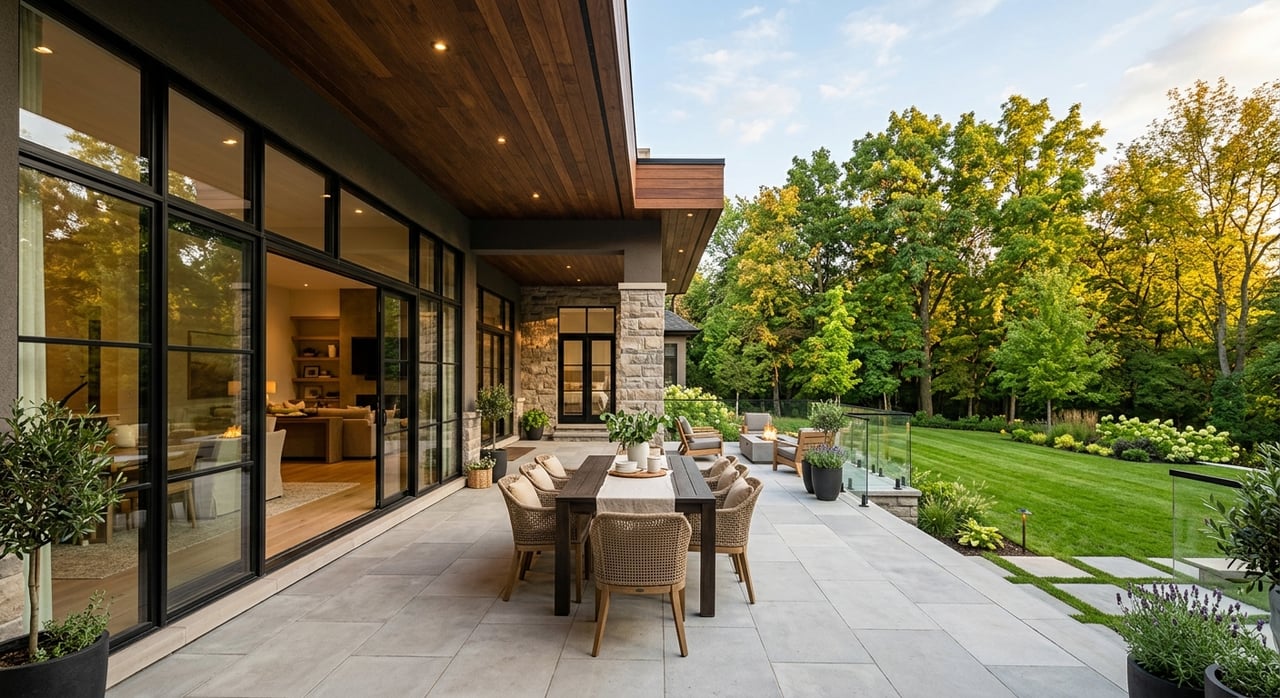
Exploring The Great Falls Luxury Home Lifestyle
If you want space, privacy, and a home that feels worlds away from the pace of the city, Great Falls stands out for a reason. This is not a typical Northern Virginia suburb with tightly packed streets and broad commercial corridors. It is an estate-driven market shaped by land, preserved scenery, and a quieter daily rhythm. If you are exploring the Great Falls luxury home lifestyle, here is what makes the area distinct and what to consider before you buy or sell here.
Great Falls is best understood as a low-density Fairfax County estate market. The U.S. Census Bureau reports a population of 15,953 across 25.36 square miles, with a population density of 629.1 people per square mile. That lower-density pattern helps explain why the area feels more private and open than many nearby communities.
The ownership profile also tells an important story. Great Falls has a 95.0% owner-occupied housing rate, a median value of owner-occupied homes of $1,411,000, and a median household income above $250,000. Taken together, those figures point to a market shaped by long-term ownership, higher-value homes, and buyers who are often making a lifestyle decision as much as a real estate one.
Fairfax County reinforces that identity in its planning language. The county describes the surrounding area as rural in character, with residential estates, large-lot subdivisions, undeveloped land, and open space. Commercial uses are limited to a few local-serving nodes, which helps preserve the area’s quiet, residential feel.
In Great Falls, luxury often starts with the land itself. The area’s development pattern is defined by estate-scale homes and large lots, which supports a sense of space that can be harder to find in closer-in Northern Virginia markets. For many buyers, that means deeper setbacks, more buffered homesites, and a stronger feeling of privacy.
That privacy-driven setting shapes daily life. You are less likely to feel surrounded by dense traffic, stacked retail, or rows of similar homes. Instead, the appeal often comes from mature trees, open land, and a residential setting that feels intentionally protected.
For buyers comparing options across Northern Virginia, Great Falls offers a different kind of luxury than more urban or compact communities. It is less about being in the middle of activity and more about having room to breathe while staying within reach of the broader Washington area.
Georgetown Pike is central to the identity of Great Falls. Fairfax County describes it as a Virginia Byway and notes that it is listed in the National Register of Historic Places. The county also warns that major widening or alignment changes would harm the corridor’s scenic and historic character.
That matters because roads help define how a place feels. In Great Falls, the main corridors support the area’s preservation-minded character rather than pushing it toward a more intense suburban pattern. As you drive through the community, that scenic quality becomes part of the luxury experience.
For many residents, this is part of the draw. Great Falls feels protected not just by lot sizes and housing patterns, but also by the public planning choices that support its long-term character.
Luxury in Great Falls is not only about the homes. It is also about access to nature, trails, and outdoor recreation that support a calmer and more active way of living. Great Falls Park is one of the clearest examples of that lifestyle anchor.
According to the National Park Service, Great Falls Park includes 15 miles of hiking trails and five multi-use trails open to horseback riding, hiking, and biking. The park also has about 10 miles of trails open to horseback riding. Visitors must bring their own horses, since trail rides are not offered there.
The park also connects into a broader regional trail network. The Potomac Heritage National Scenic Trail runs through Great Falls Park, and Fairfax County notes that the Cross County Trail begins at Great Falls National Park and extends south toward the Occoquan River. For buyers who value an active outdoor lifestyle, that regional connectivity is a meaningful part of the location.
For buyers drawn to equestrian living or simply more open land around them, Great Falls offers a strong public amenity base. Turner Farm is especially notable. Fairfax County says the property includes almost 40 acres of open fields enclosed by perimeter fencing and is open for general riding from dawn to dusk without reservations.
Like Great Falls Park, Turner Farm does not provide horses for rent. Riders bring their own, which reflects the area’s established equestrian culture. Even if you do not ride, the presence of these amenities adds to the broader sense of land, openness, and country character that helps define Great Falls.
This is one reason the community appeals to buyers who want more than square footage. They often want a setting that supports privacy, outdoor recreation, and a slower visual pace.
Great Falls is also supported by nearby parkland and preserved natural areas that broaden the lifestyle appeal. Riverbend Park offers river access along with canoeing, kayaking, paddleboarding, and fishing. Fairfax County describes it as a place with a rare combination of geology, plant life, wildlife, isolation, and beauty.
Scott’s Run Nature Preserve adds another layer to the experience. Fairfax County identifies it as one of the county’s few nature preserves and highlights its spring wildflowers and connection to the Potomac Heritage National Scenic Trail. Together, these resources help explain why Great Falls feels so different from more built-up luxury markets.
The county’s wider trail network also supports this identity. Fairfax County reports more than 900 miles of trails, bikeways, and sidewalks countywide, which helps reinforce the area’s active, outdoors-oriented lifestyle.
Part of the Great Falls luxury home lifestyle is the sense that the area has retained its roots. It is not a place that feels newly manufactured. Instead, preserved landmarks and historic sites give the community a stronger sense of continuity and place.
Great Falls Grange is one example. Fairfax County describes the building, constructed in 1929, as the last standing unaltered grange hall in Virginia, and it remains a major gathering and event venue. Turner Farmhouse, built in 1905, is another important landmark that reflects the area’s agricultural heritage.
Colvin Run Mill adds to that story. Fairfax County describes the site as wooded and landscaped, with a historic mill, general store, tours, picnic areas, and hiking. Great Falls Park also contributes to the historic backdrop, with the National Park Service noting the park’s 800 acres and the Patowmack Canal’s connection to early American history.
Great Falls does support everyday needs, but in a more village-scale format. Fairfax County’s comprehensive plan identifies local-serving commercial uses in Great Falls Village, at Georgetown Pike and Walker Road, and at Beach Mill and Springvale Road. That means you can access daily conveniences without the area feeling heavily commercialized.
The Great Falls Library is another useful example of community infrastructure. Fairfax County describes it as a gathering place on historic Georgetown Pike with more than 50,000 items, internet stations, wireless access, and programs for children and adults. It is practical, but it also reinforces the area’s small-scale, local identity.
That said, it is important to set expectations clearly. Great Falls is not a dense, highly walkable retail district. It functions more as a low-intensity, car-oriented community with a few local nodes rather than a large commercial center.
Luxury buyers often weigh peace and privacy against daily access. In Great Falls, that tradeoff should be understood honestly. The Census Bureau reports a mean travel time to work of 33.5 minutes, which gives helpful context if you are balancing space and commute.
Transportation in the area also reflects the community’s preservation priorities. Fairfax County’s Georgetown Pike planning emphasizes pedestrian crossings and refuge improvements near the library and shopping center, while the comprehensive plan discourages major widening that would change the byway’s scenic character. In practical terms, Great Falls favors character preservation over high-capacity road expansion.
For some buyers, that is exactly the point. You are choosing a place where the environment and pace of life are protected, even if the transportation pattern feels less urban and less convenience-driven than in denser parts of Northern Virginia.
If you are comparing Great Falls with other Northern Virginia luxury markets, the numbers help frame its position. The Census Bureau places Great Falls at a median owner-occupied home value of $1.411 million. That is comparable to McLean at $1.4127 million and above Vienna at $1.0088 million and Arlington at $895,000.
But price alone does not tell the full story. Great Falls also has a much higher owner-occupancy rate than Arlington, which supports its reputation as a more estate-oriented and lower-turnover market. If you want a luxury setting defined by land, privacy, and long-term ownership, Great Falls occupies a very specific place in the regional landscape.
For sellers, that positioning matters too. Marketing a Great Falls property well means understanding that buyers are often purchasing a package of features that includes lot scale, setting, privacy, scenic context, and long-term lifestyle fit. Those are not details to gloss over. They are central to value.
If you are buying in Great Falls, it helps to think beyond list price. Pay attention to lot configuration, surrounding land use, access routes, privacy, and how the property fits the area’s estate pattern. Buyers exploring custom homes, new construction, or teardown opportunities may find Great Falls especially compelling because the land itself can be a major part of the opportunity.
If you are selling, presentation and positioning are critical. Great Falls homes often need to be marketed through both a lifestyle lens and a value lens. Buyers here are often thoughtful and analytical, and they want to understand not just the home, but the setting, tradeoffs, and long-term appeal.
That is where local market knowledge matters. In a place like Great Falls, strong guidance means helping you evaluate the home in context, not in isolation.
If you are considering a move in Great Falls, working with an advisor who understands luxury positioning, custom-home potential, and the nuances of Northern Virginia estate markets can make the process far more strategic. To start that conversation, connect with Hanna Abebe.
Whether you’re buying your first home, selling a trust property, or navigating a probate sale, my goal is always the same: to provide honest guidance, strong advocacy, and a smooth experience from beginning to end. Real estate is about people, not just properties. I would be honored to help you take your next step.
2300 Clarendon Blvd Ste 200 Arlington, VA 22201