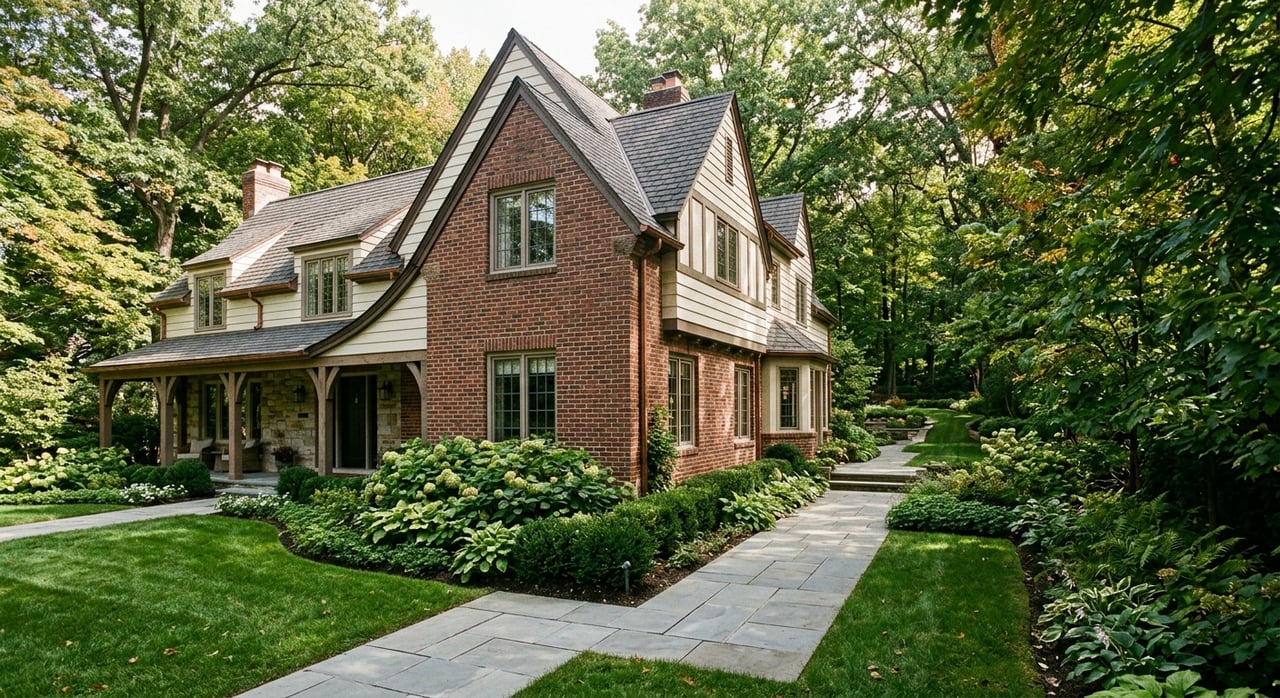
Teardown Or Renovate In Vienna? How To Evaluate Your Lot
Wondering whether your Vienna property is better as a renovation, a teardown, or an as-is sale? You are not alone. Many owners see strong demand and high prices in Vienna, then assume an older home automatically has teardown value. In reality, the lot often tells the real story. If you understand zoning, site constraints, and the approval path before making a move, you can make a smarter decision with fewer surprises. Let’s dive in.
In Vienna, lot value depends on far more than the age or condition of the existing house. The Town of Vienna and Fairfax County both play a role in the review process, and that means a property’s true potential is shaped by rules as much as by market demand.
That matters because two homes that look similar from the street can have very different redevelopment options. One may support a straightforward renovation or replacement home, while the other may face setbacks tied to trees, grading, frontage, or environmental review.
Vienna is also a market where demand remains strong. Redfin reported a median sale price of $1,599,555 for homes sold over the three months ending May 2026, with homes selling in about 10 days and receiving an average of 4 offers. That kind of demand can support land value, but buyers are still selective about what a lot can legally and physically support.
If you are evaluating teardown versus renovation, zoning is one of the first things to review. In Vienna’s detached residential districts, the buildable envelope is defined by minimum lot area, frontage, setbacks, lot coverage, and height.
For example, RS-16 requires 16,000 square feet of lot area, 50 feet of frontage at the front lot line, 65 feet at the front building line, and 90 feet at the midline. It also limits lot coverage to 25 percent, caps height at 35 feet, and applies 35-foot front, side, and rear setbacks.
RS-12.5 starts at 12,500 square feet and allows a 30-foot front setback. RS-10 starts at 10,000 square feet, requires 45 feet of frontage at the front lot line, allows a 25-foot front setback, and also limits coverage to 25 percent.
These standards do not only matter for a brand-new house. Article 4A states that they generally apply to new construction, additions, and alterations in RS-10, RS-12.5, and RS-16. So if you are hoping to solve an outdated layout with a major addition, you may run into some of the same dimensional limits as a teardown project.
Some older Vienna lots do not meet current dimensional standards, even if they were lawful when created. Vienna defines a nonconforming lot as one that does not meet current requirements but was legal under prior rules or predates the ordinance.
This can change the risk profile of a project. A nonconforming lot does not automatically rule out a renovation or rebuild, but it can make the path less predictable and may increase the importance of early zoning review.
If you are weighing options, this is one of the biggest reasons not to rely on assumptions. A lot that seems like an obvious builder play may actually carry more friction than expected.
In Vienna, site conditions can quickly shift the economics of a teardown. A property may have enough size on paper, but the physical constraints of the land can still make redevelopment more difficult.
Tree conservation is a major factor. Vienna’s tree conservation code took effect July 29, 2024, and tree preservation and canopy requirements apply to all parcels. The required canopy percentage varies by zone, and the Town’s guidance says the target is based on pre-development canopy. If preservation is not feasible, new trees are used to help meet the requirement.
Drainage and environmental conditions also matter. If a property touches a stream buffer, wet area, or floodplain, Fairfax County may treat part of the site as a Resource Protection Area. In those cases, a Water Quality Impact Assessment is generally required for land disturbance, development, or redevelopment, and redevelopment is allowed only if there is no increase in impervious cover and no further encroachment into the RPA.
Topography can be another hidden issue. For single-unit detached dwellings, Vienna limits lot deviation so the finished grade may not differ from the pre-existing grade by more than 3 vertical feet at any point around the building footprint unless the Director of Public Works grants a waiver for good cause.
In practical terms, this means a teardown is not always the simpler choice. On a constrained lot, a renovation may preserve more value by avoiding some of the land disturbance and site work that make a rebuild harder.
When owners picture a teardown, they usually focus on the house itself. But in Vienna, some redevelopment plans can also trigger frontage obligations.
Article 4A says the developer of any lot shall dedicate land along the frontage for sidewalk, curb, and gutter improvements as shown in the adopted Town Pedestrian Plan. Depending on the site, that can affect usable land, design flexibility, and overall project cost.
This is another reason to analyze the lot early. A rebuild that looks attractive at first glance may become less compelling once frontage requirements are factored into the plan.
Not every Vienna property faces design review beyond standard zoning and permitting, but some do. In the Windover Heights Historic District, the Windover Heights Board of Review looks at new construction and major exterior alterations that are visible from the public right-of-way.
The Town describes Windover Heights as a single-family neighborhood with mostly older homes, open spaces, and mature trees. The Town’s 2026 comprehensive plan also notes a goal of supporting the district’s integrity and evolution while balancing historic preservation with modern infrastructure needs.
If your property falls in or near an area with added design scrutiny, timing and design flexibility can change. That does not mean redevelopment is off the table, but it does mean the process deserves careful planning.
Renovation is often the cleaner option when the house has a workable structure and the layout can be improved without pushing the zoning envelope. It can also be the better path when mature trees, grading limits, RPA concerns, or historic review would make a rebuild slower or riskier.
For many Vienna owners, this is where the lot analysis becomes so useful. If the site has real constraints, putting capital into a thoughtful renovation may create a stronger outcome than chasing a new-build plan with more approval risk.
An as-is sale can be appealing when the lot appears buildable and the current house is functionally outdated or structurally compromised. The strongest builder lots typically have enough width and depth to fit the code, limited environmental constraints, and a clearer path through permitting.
That said, a teardown premium should never be assumed. Vienna’s market supports demand for good land, but the code still has to work in your favor.
A custom-build or lot-partnership approach can make sense when the lot is attractive enough to support a premium finished product and you want to explore more upside than a simple as-is sale might offer. In Vienna, this path is usually better suited to lots that are compliant or close to compliant, with manageable tree, drainage, and review conditions.
The more constrained the site, the more the economics can erode. That is why an analytical review up front is so important.
In Vienna, your decision should not rest on a contractor estimate alone. The Town’s Planning and Zoning Department handles zoning permits, compliance, rezonings, subdivisions, variances, and certificates of occupancy, while Fairfax County serves as the building official for structural, mechanical, electrical, plumbing, fire, and health review.
For residential work, the Town says a zoning permit or building permit may be required before permanent modifications. A Certificate of Occupancy is issued only after county inspections and Town site and zoning inspections are complete.
If demolition is part of the plan, Fairfax County requires a residential demolition permit for complete or partial demolition of a residential structure, and projects in Vienna also require separate town approvals. County review may involve multiple groups, including zoning and, when relevant, health and fire staff.
The Town also encourages pre-application meetings when the scope of work is unclear. That can be a practical step if you are trying to compare renovation and teardown paths before committing real money.
Before you decide how to move forward, review these items:
If even one of these items raises a question, it is worth slowing down. In Vienna, the best real estate decisions usually come from understanding both value and friction.
A teardown is not automatically the highest and best use of an older Vienna property. In many cases, the right answer depends on what the lot can realistically support after zoning, trees, grading, drainage, and approvals are taken into account.
If you want to evaluate your options with a local, analytical lens, Hanna Abebe can help you think through the market side and the property-specific questions that shape value in Vienna. For tailored guidance on whether to renovate, sell as-is, or explore a custom-home opportunity, connect with Hanna Abebe.
Whether you’re buying your first home, selling a trust property, or navigating a probate sale, my goal is always the same: to provide honest guidance, strong advocacy, and a smooth experience from beginning to end. Real estate is about people, not just properties. I would be honored to help you take your next step.
2300 Clarendon Blvd Ste 200 Arlington, VA 22201